Yogananda on "How to Live" Schools for Children and Youth
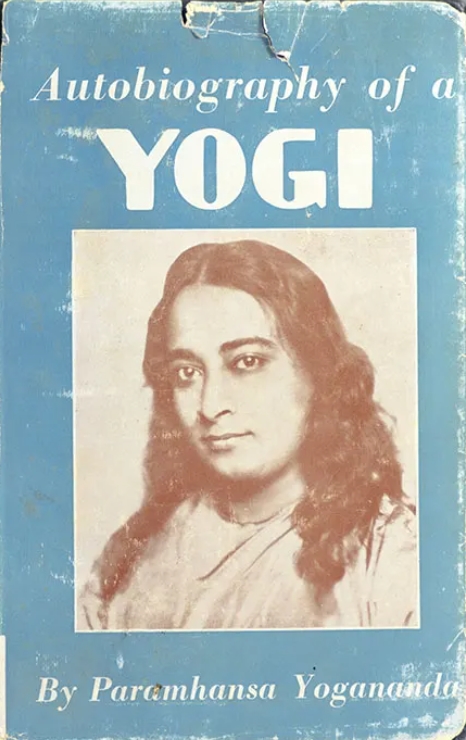
The ideal of an all-sided education for youth had always been close to my heart. I saw clearly the arid results of ordinary instruction, aimed only at the development of body and intellect. Moral and spiritual values, without whose appreciation no man can approach happiness, were yet lacking in the formal curriculum. I determined to found a school [at Ranchi] where young boys could develop to the full stature of manhood.
Source: Autobiography of a Yogi, Chapter: Founding a Yoga School at Ranchi, 1946 1st edition
Overcoming restlessness of body and mind by concentration techniques has achieved astonishing results: it is no novelty at Ranchi [school] to see an appealing little figure, aged nine or ten years, sitting for an hour or more in unbroken poise, the unwinking gaze directed to the spiritual eye.
Source: Autobiography of a Yogi, Chapter 40: I return to India, 1946 1st edition
The unique feature at Ranchi [school] is the initiation into Kriya Yoga.
Source: Autobiography of a Yogi, Chapter 40: I return to India, 1946 1st edition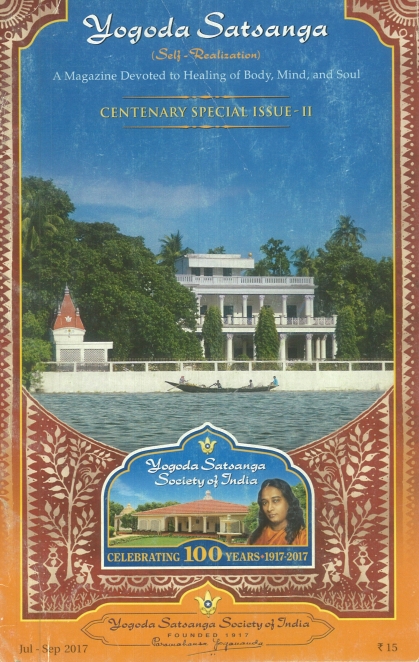
Moral and spiritual training should be made the backbone of such institutions without neglect of academic education.
Source: YSS magazine, Article: "How-to-Live" Spiritual Training: The Appeal That Launched the YSS Work, Jul-Sep, 2017, Pg 13
[Around 1918-19...] Paramahansaji had picked a few students for the practice of Kriya, and used to help them according to the stages they had reached. To other students his general instructions and methods were for controlling the mind, withdrawing all the senses, and plunging into deep meditation. His instruction to all pupils was to cultivate moral and ethical principles by observing Yama and Niyama. Paramahansaji wished every student to have a strong and healthy body.
Source: "With Paramahansa Yogananda in Ranchi", SRF Magazine, 1977 Winter, Pg 33
Time went by, and in 1935 I was again blessed with the darshan (holy sight) of Guruji at Ranchi... In his presence I felt as if I were again a little boy sitting in front of the Guru. At long last I dared to ask whether he was leaving us and going back to America. With the same tender smile, which radiated love, light, and bliss, his simple answer was: “Am I not always with you?” My strong feeling of separation vanished.
Source: "With Paramahansa Yogananda in Ranchi", SRF Magazine, 1977 Winter, Pg 33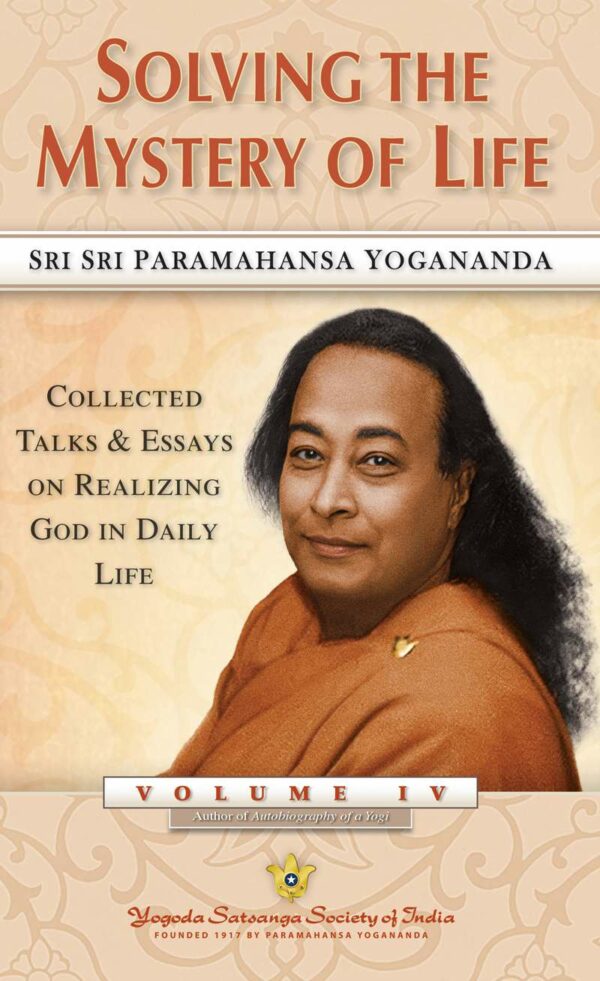
The schools do not teach children how to live, how to have that divine happiness. These universal teachings should be given in the schools — not to emphasize any particular religion, but to show that the way to happiness is meditation and contact of God, and that by such contact one may learn from God what one should do.
Source: Solving the Mystery of Life, Chapter: How to Succeed in Finding God
It isn't academic education alone that makes people happy. It is “how-to-live” education - how to develop a harmonious, moral life, stronger will power, and spiritual understanding - that will bring happiness.
Source: The Divine Romance, Chapter: How to Free Yourself From Bad Habits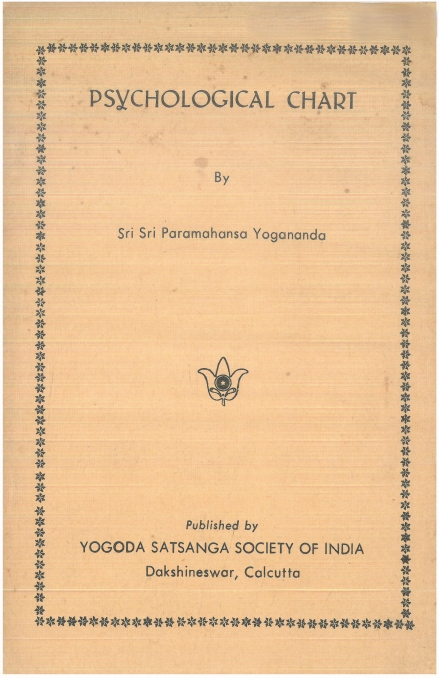
This Psychological Chart is used in the training of students in my school in Ranchi, India, where they are carefully and lovingly observed, and their conduct and habits, as well as intellectual faculties, are recorded. These slow and comparative methods of daily, weekly, monthly, and yearly observation-records of a student’s life furnish the teachers with sufficient data to enable them to know what particular line to follow in regulating the lives of their students in the right way, by various changes of environment, company, discipline, and training.
Source: Psychological Chart Document
I consider properly organized schools as gardens where infant souls are grown and nurtured. The gardeners should be well-selected and co-operated with by parents and the public. The teachers should never be neglected for they are soul-moulders. The care and spiritual nourishment of the early life of a human plant usually determines its later development.
Source: East-West Magazine, Article: Curriculum for Balanced Living, Nov-Dec, 1925, Pg 21
Self-Realization [Yogoda Satsanga] is a philosophy of living: right meditation, right thinking, and right living. Bring up your children in this philosophy. Don't pamper them, or teach them by wrong example to cater to their bodies and harmful desires; give them good training.
Source: The Divine Romance, Chapter: A New Look at the Origin and Nature of Cosmic Creation
Our self-realization work started in a little hut in India with 25 cents a month as rent. Father used to call me back every night, “stay in the day but don't stay at night”. But I said, “in this little hive there is honey and the bees will be coming”. So when our honey of God gathered in that little hive, bees of devotees began to come from far and near.
Source: To Make Heaven on Earth - Audio talk, 23min mark
It is not my wish to develop a large, mechanical organization, but a hive filled with the spiritual honey of God.
Source: The Divine Romance, Chapter: How to Find a Way to Victory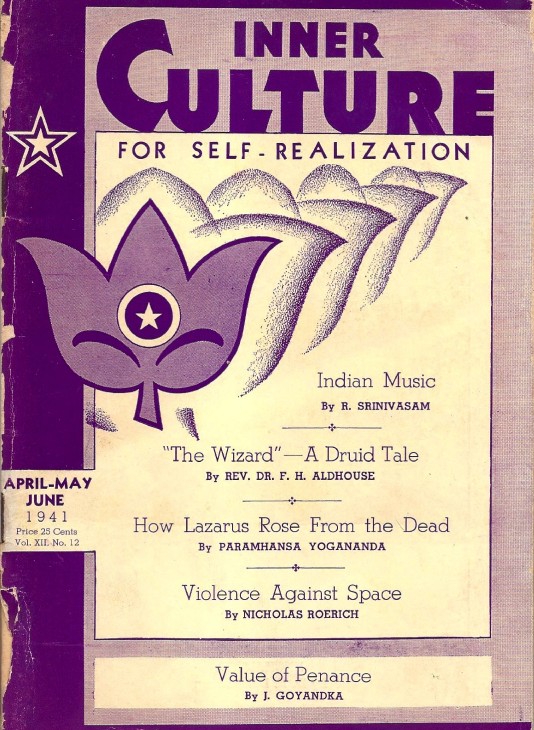
Never use spirituality for commercial gain.
Source: "What are the Qualifications of a Spiritual Teacher?", Inner Culture Magazine, 1941, Apr-Jun, Pg 50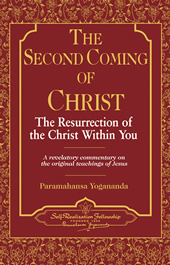
A spiritual teacher should have Self-realization, or at least be sincerely striving for that God-attunement and subversion of the ego.
Source: Second Coming of Christ (Book), Discourse 23, “Fishers of Men”
Only a true disciple will make a good teacher. Believe in and know well the things you want to teach. The intuitional teacher is the greatest. Intuition doesn't have to depend on reason. It knows. You must believe that help will come when needed. The divine law works. Make up your mind that you are inspired by God and He will always send some one to help you when necessary.
Source: "What are the Qualifications of a Spiritual Teacher?", Inner Culture Magazine, 1941, Apr-Jun, Pg 50AI chat with the docs AI chat with the docs
FAQs
FAQsFAQs
Pre-requisite for understanding these documents
These documents are intended mainly for those already familiar with Paramahansa Yogananda’s teachings. His insights on child education are spread across talks, writings, and historical records, rather than being presented in a single place. I have attempted to gather and bring these ideas together in one place.
To have a proper understanding of these documents, one should have read some of His books, such as Autobiography of a Yogi or The Divine Romance, and have several years of experience in practising His teachings of Kriya Yoga and Devotion.
However, if you wish to gain a quick, basic understanding of His teachings, you can visit His organization's website, explore this library, or read any of His books.
Two exceptions—“Building Hives with Honey” and “Qualities of a Spiritual Teacher”—can still be meaningfully appreciated even by readers who are new to His work.
Why it is important to understand His teachings before reading?
If you are new to His teachings, it may be challenging to grasp these documents in the proper context. Here are a few examples:
- In Autobiography of a Yogi, he discusses Kriya Yoga extensively, but in the chapter on schools he focuses on other aspects—nature living, yoga, and education. While he may not elaborate on Kriya in that chapter, those familiar with his teachings understand that Kriya was abviously an important part of the school. He himself called it a “yoga school” and mentioned that Kriya Yoga initiation was a “unique feature” of the school. His Swami teachers at the school also spoke about Kriya.
- When Paramahansa Yogananda speaks of contacting God, it is implicit that he is referring to Kriya Yoga (since Kriya brings God-contact). When He speaks of yoga, He means meditation and yogic techniques, rather than merely physical postures. When he speaks of schools, he emphasizes natural surroundings and democratic living, but his actual teachings always keep meditation and devotion at the centre. Kriya, devotion, God-contact through meditation, and simplicity are some of the core elements of his divine mission to help souls find God and realize the Self. In fact, that is the purpose of any true saint.
- Most importantly, without practising and experiencing results from His teachings, it is difficult to understand the profound impact of His teachings. And it is difficult to understand who He truly was—and what He truly is.
Do you own the content used here?
No, I do not own the content used in the documents. In the beginning of some of these documents, I give this explanation:
This document is created with the sole intention of making Yogananda’s fans aware of Yogananda’s vision of “How to Live” Schools and Education of Children & Youth, in more detail. This awareness may inspire his people to implement what He wanted, in the way He wanted, and with the same Divine Spirit which He always wanted.
The creator of this document has love and respect for all the people, publishers and organizations who are the real owners of the content presented here. I hope I (the creator) will be allowed to continue this and other associated documents, because my intentions are not to cause slightest spiritual harm or any harm to anyone, Human or Divine. The only intention is to help.
This document has no commercial angle to it. I have tried to make this document tidy and good looking because I have a design background and I know that well designed documents are easier to read, easier to recall, and feel more authentic.
Also, I have no plans to distribute printed copies of this document. If a need arises in the future, I will take proper permission from the copyright owners. The current intention is to just keep this Google Document available to public at this URL so that they can read it online.
What are the sources of information in these documents?
Most of the content is copied verbatim from some of the books, recordings and documents. The primary sources of the information are SRF/YSS books (1st editions and latest editions), old SRF magazines, newer SRF/YSS magazines, archival documents, some valuable books by disciples (outside SRF), and research conducted on the internet. A few passages here and there have been written by the creator/editor of these documents.
Why give so much important to 1st editions?
Readers familiar with Paramahansa Yogananda’s history will know that sharing older writings helps increase unity, trust, and harmony. In almost all cases, the latest editions of the books are very similar to the older ones. Feel free to read the newer editions. Chapter and section names have been shared liberally to help you find the text in your personal copies.
What are your thoughts about SRF/YSS?
I am a firm supporter of SRF/YSS. I willingly try to follow the wishes of Yogananda ji, his direct disciples, and the monastics who run the organization today. My conscience is strongly bent towards following the wishes of SRF/YSS. My inner experiences of divinity over the last few years have greatly deepened my reverence for the organization and the leadership.
Also, I feel enveloped by Daya ma's love and I often feel that through her voice in her recordings she often writes her thoughts upon my mind. I can sense a remarkable firmness and purity in them. Her insistence on the need for God for humanity and also for the sunday schools for children, often rings in my heart and mind.
(Here, the word "God" does not mean what we think of Him theoretically. It means what He is in our hearts and mind when we experience Him - God of love, joy, strength, peace, power, wisdom, contentment, and so much more. When we know Him, we know how much we need Him above all else.)
Can these documents be printed?
Yes, you can print any of the documents for personal use on A4-sized paper. Simply open any of the documents on a laptop or desktop computer, and go to File > Print.
However, please note that these documents are still being revised and are likely to undergo further changes (mostly cosmetic revisions).